Corporate financing in Indonesia is never just a matter of agreeing on a loan amount and signing a contract. Long before funds are disbursed, companies must navigate a layered framework of bank rules and regulations that govern who can lend, how much, under what conditions, and with what safeguards. For any business, whether a domestic startup scaling its operations or a foreign entity making its first foray into Southeast Asia’s largest economy, understanding this framework is essential.
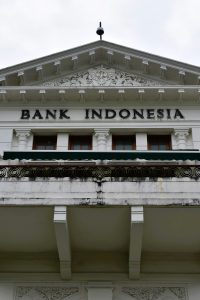
Indonesia’s banking sector operates under a dual-regulatory structure that has been significantly strengthened in recent years. At the macroprudential level, Bank Indonesia (BI) acts as the central bank, responsible for monetary policy, payment system oversight, and the stability of the rupiah. At the microprudential level, the Financial Services Authority (Otoritas Jasa Keuangan, or OJK) supervises and regulates all banking and non-banking financial institutions. Together, they set the ground rules under which every corporate loan in the country is structured and executed.
The Legal Foundation: From Banking Law to the Financial Omnibus Law

The cornerstone of Indonesia’s banking legal framework is Law No. 7 of 1992 on Banking, which has been updated multiple times. The most consequential recent amendment came in January 2023 with the enactment of Law No. 4 of 2023 on the Development and Strengthening of the Financial Sector, widely known as the Financial Omnibus Law. This legislation streamlined regulatory authority, extended the duties of BI and OJK, introduced new supervisory mechanisms, and created a more cohesive legal environment for financial sector participants.
For corporate borrowers and lenders alike, the Omnibus Law introduced immediate practical consequences. It consolidated the framework for guarantees, collateral, and syndicated lending. It also established a clearer basis for sustainable finance products, green bonds, and ESG-linked financing areas that are rapidly gaining traction among both local and international investors in Indonesia.
For corporate borrowers and lenders alike, the Omnibus Law introduced immediate practical consequences. It consolidated the framework for guarantees, collateral, and syndicated lending. It also established a clearer basis for sustainable finance products, green bonds, and ESG-linked financing areas that are rapidly gaining traction among both local and international investors in Indonesia.
The Role of OJK in Setting Bank Rules and Regulations
OJK is the primary author of the bank rules and regulations that directly affect corporate financing transactions. Its regulations cover a wide spectrum: from the minimum capital requirements banks must maintain, to the governance standards imposed on their boards of directors, to the specific products banks are permitted to offer.
In December 2024, OJK issued OJK Regulation No. 26 of 2024 (POJK 26) on the Expansion of Banking Business Activities. A notable development under POJK 26 is that conventional commercial banks and sharia commercial banks are now permitted to invest directly in companies that support the banking industry, including fintech providers, switching companies, and clearing companies. This regulatory expansion is designed to encourage synergies between banks and non-bank technology players, ultimately creating more efficient financial products for corporate clients.
On the governance side, OJK Regulation No. 17 of 2023 on the Implementation of Governance for Commercial Banks requires banks to maintain robust internal controls, independent audit functions, risk management committees, and documented policies on anti-fraud and anti-money laundering. For corporate borrowers, this means their bank counterparts are held to high governance standards, a factor that contributes to the overall reliability of the Indonesian banking system.
Capital Adequacy and Prudential Standards
Indonesia has aligned its banking sector with international Basel III standards, implementing them through a series of OJK regulations. These cover three core pillars:
Capital Adequacy: Governed by OJK Regulation No. 11/POJK.03/2016 as amended by OJK Regulation No. 27 of 2022, this sets minimum capital requirements for commercial banks based on their risk profile. Banks must hold sufficient capital relative to their risk-weighted assets — a discipline that directly determines how much they can lend and at what terms.
Liquidity Requirements: OJK Regulation No. 19 of 2024 on the Mandatory Liquidity Coverage Ratio (LCR) ensures banks hold enough high-quality liquid assets to survive a 30-day stress scenario. OJK Regulation No. 20 of 2024 governs the Net Stable Funding Ratio (NSFR), requiring banks to maintain stable long-term funding relative to their long-term assets.
Risk Management: OJK Regulation No. 18/POJK.03/2016 on the Implementation of Risk Management for Commercial Banks requires banks to identify, measure, monitor, and control credit risk, market risk, liquidity risk, and operational risk. For corporate borrowers, this translates into thorough credit assessments and detailed documentation requirements before any financing is approved.
Types of Corporate Financing Available Under Indonesian Bank Rules
Indonesian banks offer a range of financing structures to corporate clients, each governed by specific provisions within the overarching regulatory framework:
Working Capital Loans (Kredit Modal Kerja): Short-term credit facilities used to finance day-to-day business operations. These are among the most common forms of bank financing for corporations and are subject to OJK’s asset quality regulations, which classify loans into current, special mention, substandard, doubtful, and loss categories.
Investment Loans (Kredit Investasi): Medium-to-long-term credit used to finance capital expenditures such as purchasing equipment, constructing facilities, or expanding operations. Banks assess these loans against the projected cash flows of the investment.
Syndicated Loans: For larger transactions that exceed a single bank’s lending capacity or risk appetite, multiple lenders pool resources under a single credit agreement. Syndicated lending is expressly recognised under Indonesian law, with rules covering agent banks, intercreditor arrangements, and information sharing among participating lenders.
Sustainable Financing: Reflecting global trends and government policy, Indonesian banks increasingly offer green loans, sustainability-linked loans, and ESG-tied financing. OJK has developed a two-phase roadmap to promote sustainable finance, with Phase II (2021–2025) focused on adopting ESG principles and diversifying sustainable finance products.
Collateral and Security Under Bank Rules and Regulations
Security arrangements are a critical component of corporate financing in Indonesia. Under Indonesian law, the main types of collateral available to secure lending obligations include:
Mortgage (Hak Tanggungan): A security right over land and immovable property. This is the most common and preferred form of collateral for Indonesian banks because it grants the holder preferential rights over other creditors in a bankruptcy proceeding.
Fiduciary Security (Jaminan Fidusia): Used over movable assets, such as machinery, receivables, or inventory, where possession remains with the debtor. Fiduciary security must be registered with the Fiduciary Registration Office to be enforceable against third parties.
Pledge (Gadai): A security right over movable assets where physical possession is transferred to the creditor. It is commonly used for financial assets such as shares or bank deposits.
Corporate Guarantees: A company can guarantee another company’s borrowings within its corporate group, provided the arrangement does not conflict with the Corporate Benefit Principle under Indonesian Company Law. Unlike asset-backed collateral, corporate guarantee holders are treated as unsecured creditors in bankruptcy proceedings and therefore do not enjoy preferential rights over secured creditors.
Bank Rules and Regulations for Foreign Corporate Borrowers
Foreign companies operating in Indonesia, whether through a foreign direct investment company (PT Penanaman Modal Asing) or a representative office, face an additional layer of regulation when seeking corporate financing from Indonesian banks.
Bank Indonesia Regulation No. 7 of 2024 (PBI 7/2024), issued in August 2024, enforces stricter controls on the Offshore Funding Ratio (RPLN) for Indonesian banks. This regulation imposes more rigorous prudential indicators governing the proportion of short-term offshore loans that banks may carry on their books, a measure designed to manage systemic risk arising from cross-border financing.
For foreign-owned entities borrowing domestically, OJK and BI regulations require compliance with anti-money laundering (AML) and counter-terrorism financing (CTF) obligations, including robust Know Your Customer (KYC) procedures. BI Regulation No. 10 of 2024 specifically addresses AML and the prevention of terrorism financing for all BI-supervised entities. Foreign borrowers must also be aware that repayment of offshore loans in foreign currency requires compliance with BI’s foreign exchange regulations.
Interest Rate Benchmarks: Transitioning Away from JIBOR
One significant regulatory development currently unfolding in Indonesia’s lending market is the transition away from the Jakarta Interbank Offered Rate (JIBOR) toward alternative reference rates, most notably IndONIA (the Indonesia Overnight Index Average). This transition mirrors the global shift away from LIBOR that has reshaped lending markets worldwide.
The National Working Group on Benchmark Reform (NWGBR) has issued guidelines for this transition, including the use of fallback clauses in existing financing contracts. For corporations with existing credit facilities referencing JIBOR, this means their loan agreements may require amendment. Companies entering into new credit facilities in 2025 and beyond should ensure their agreements reference the new benchmark rates or include appropriate transition mechanisms.
Compliance Obligations for Corporate Borrowers
Beyond the bank rules and regulations that govern financial institutions themselves, corporate borrowers are subject to a range of compliance requirements as a condition of obtaining and maintaining their credit facilities.
Reporting and Disclosure: Banks are required to assess and monitor the credit quality of corporate loans on an ongoing basis. Borrowers must provide periodic financial statements, audited accounts, and other disclosures as required under the credit agreement and applicable OJK regulations.
Negative Pledge and Restrictive Covenants: Corporate credit agreements typically include negative pledge clauses restricting the borrower from creating additional security over its assets without lender consent. Borrowers must carefully review their existing loan agreements before pursuing additional financing to ensure they are not inadvertently in breach of these provisions.
SLIK Reporting: OJK Regulation No. 11 of 2024 requires all financial lenders, including fintech platforms, to participate in SLIK (Sistem Layanan Informasi Keuangan), Indonesia’s national credit reporting system. This means that a corporate borrower’s credit history is increasingly visible across the financial system, making compliance with existing obligations all the more important.
The Rise of Sustainable Finance in Indonesian Banking
A structural shift is underway in how Indonesian banks approach corporate financing. Driven by OJK’s Sustainable Finance Roadmap and increasing pressure from international lenders and ESG-focused investors, banks in Indonesia are expanding their portfolios of green loans, social bonds, and sustainability-linked credit facilities.
OJK Regulation No. 51/POJK.03/2017 on the Implementation of Sustainable Finance for Financial Services Institutions introduced the foundational framework for ESG integration in Indonesian banking. Under this framework, banks that demonstrate strong sustainable finance performance may qualify for OJK incentives, including recognition through the Sustainable Finance Award and participation in industry competency programmes.
For corporations, this trend opens new opportunities. Companies with credible ESG strategies, reduced carbon footprints, transparent governance, and measurable social impact may find they can access financing on more favourable terms. Conversely, companies operating in environmentally sensitive sectors may face additional scrutiny from lenders aligning their portfolios with sustainability targets.
Why Qualified Legal Counsel Makes a Difference
The complexity of Indonesia’s banking regulatory landscape, spanning primary legislation, OJK regulations, BI circulars, and evolving interpretive guidance, means that corporate financing transactions carry meaningful legal risk if not properly structured.
From reviewing credit facility agreements to advising on collateral perfection, from conducting legal due diligence on borrower entities to ensuring compliance with AML and KYC obligations, experienced corporate legal counsel can identify risks that a commercial team might overlook. This is particularly true in cross-border transactions, where the interplay between Indonesian bank rules and regulations and the laws of a foreign jurisdiction can create unexpected complications.
At Warganegara And Partners (WNP Asia), our team of experienced corporate lawyers has a deep understanding of Indonesia’s financial sector regulatory framework. We advise both domestic and international clients on corporate financing transactions from straightforward working capital facilities to complex multi-lender syndicated loans and sustainable finance structures. Our work spans legal aspects of foreign direct investment, establishment of business entities, merger and acquisition transactions, and capital market activities, providing a holistic perspective that goes beyond the financing transaction itself.
Key Takeaways for Corporate Decision-Makers
Indonesia’s bank rules and regulations have matured significantly, creating a more transparent and internationally aligned banking environment. The Financial Omnibus Law, the ongoing Basel III implementation, new OJK governance regulations, and the shift toward sustainable finance all represent structural improvements that benefit well-prepared corporate borrowers.
At the same time, this regulatory sophistication demands a correspondingly rigorous approach from corporations seeking financing. Understanding the regulatory environment and working with counsel who knows it well is the most effective way to secure financing on commercially sound terms, avoid compliance pitfalls, and build a banking relationship that supports long-term business growth.
If your company is planning a financing transaction in Indonesia, or if you need guidance on how current regulations affect your existing credit arrangements, contact the WNP Asia legal team to discuss your specific circumstances with an expert.